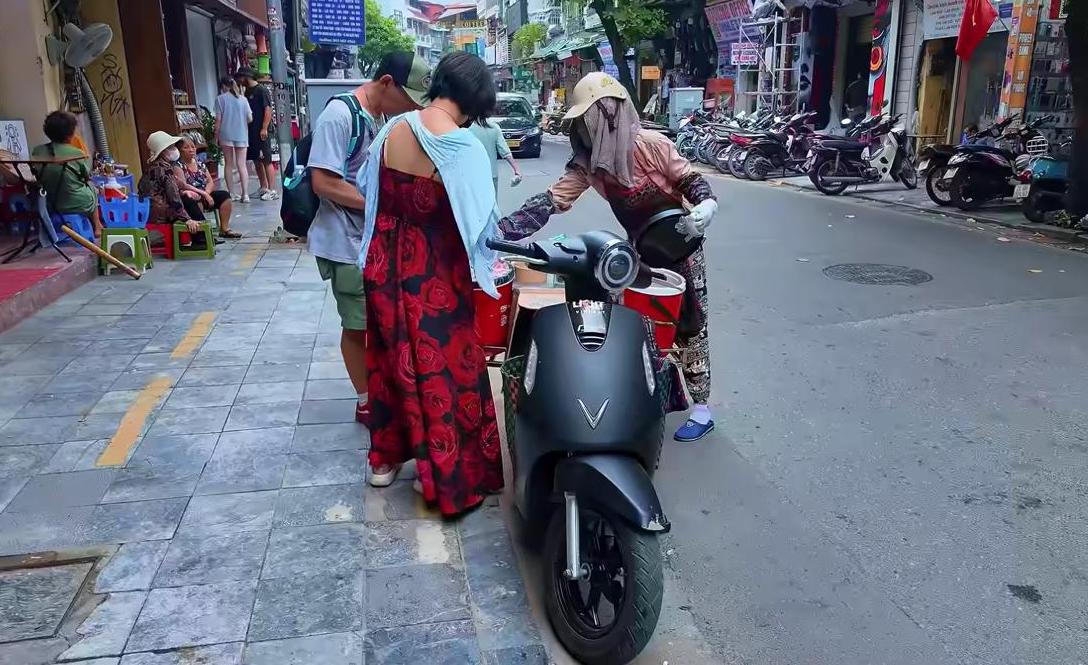
Gaps in identifying safe products
In the context of an increasingly diverse market, the regulatory system for labeling and safety warnings has been gradually improved, but in reality, a significant gap still exists between consumers “having information” and their ability to “understand and use that information.”
 Associate Professor Bui Thi An, President of the Hanoi Women Intellectuals Association, speaks at the thematic workshop “Connecting Communities for Safe Consumption: Enhancing Understanding of Product Labels” on June 23. Photo: Hong Nhung
In areas like Soc Son, Kim Anh, and many suburban communes, the consumption habits of a segment of the population are still primarily based on personal experience, familiarity with sellers, or price, rather than relying on scientific information on product packaging. This leads to consumers not paying enough attention to or knowing how to utilize important information such as chemical composition, usage instructions, safety warnings, expiration dates, or storage conditions.
Furthermore, public awareness of the harmful effects of toxic chemicals in consumer products and building materials remains limited. People frequently come into contact with cosmetics, detergents, plastics, packaged foods, paints, adhesives, plywood, etc., which may contain formaldehyde, volatile organic compounds (VOCs), lead, or asbestos. Worryingly, many effects do not appear immediately but develop silently over the long term, increasing the risk of chronic respiratory, neurological, endocrine, and cancerous diseases.
Another “gap” lies in the ability to read and understand product labels. Consumers struggle to decipher warning symbols, safety icons, or quality standards. As a result, product choices remain largely based on emotion, price, or habit. This leads to the prevalence of unsafe consumer behavior, which not only increases health risks but also contributes to non-biodegradable waste, puts pressure on the environment, and goes against the trend of green consumption and sustainable development.
Meanwhile, communication efforts regarding safe and green consumption remain limited. Although Hanoi has issued numerous policies on green growth, consumer protection, and chemical management, implementation at the grassroots level is fragmented and lacks coordination. Many communication activities are general in nature, lacking visual aids and specific guidance models to help people “understand and follow.”
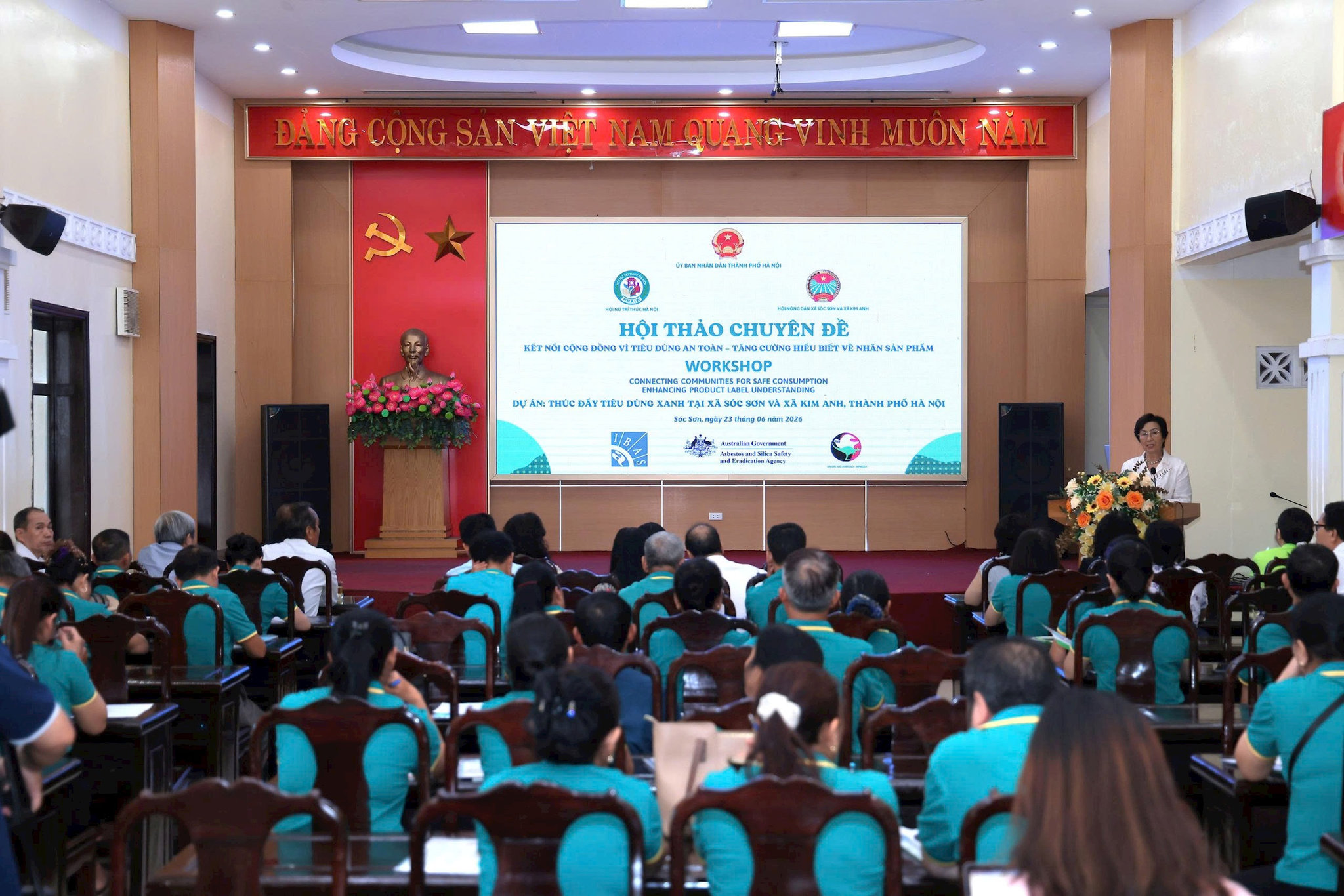
 Members of the Farmers’ Association, the Women’s Union, and farming households in Soc Son and Kim Anh communes participated in the workshop. Photo: Hong Nhung.
Eco-labels and safety certifications on products have not yet played a guiding role. Many people do not understand or care about these symbols.
According to Associate Professor Bui Thi An, President of the Hanoi Women Intellectuals Association, in the context of developing green agriculture, circular economy , and green growth, green consumption has become an essential requirement. She emphasized that labeling and information transparency not only enhance the value of goods but also serve as a tool to protect consumer rights. Simultaneously, community-based training activities help people “understand correctly and act correctly,” forming safe consumption habits.
You may also like
 These are the areas Hanoi prioritizes for investment, creating breakthroughs for a new growth model.Urban infrastructure, high-quality education and healthcare, science and technology, innovation, high-tech industries, and modern services are the priority areas for investment in Hanoi. These are identified as important growth drivers, aiming to transform Hanoi into a high-value science, technology, finance, and service center for the entire country and the region.
 An author in her late 70s writes for the first time about marriage and family.After more than 40 years of writing, author Nguyen Dong Thuc has left his mark on readers with over 30 published books, including novels, long stories, short stories, and memoirs, some of which have been reprinted many times. Recently, at the age of 75, the author released his long story “Life is Sometimes Confused,” a work that delves into the wounds and conflicts of marriage and conveys a message about the strength to rise again after adversity.
 Capital donations, given with compassion, have helped many families overcome difficulties.Policy credit funds channeled through the Phu Dien Ward Women’s Union are becoming a driving force helping many families develop their economy, increase their income, and stabilize their lives. Beyond supporting access to financial resources, the Union also accompanies, connects, and instills confidence in its members, enabling them to rise up through their own labor.
Regarding health protection warnings, Dr. Le Minh Hanh, Deputy Head of the Examination Department, Institute of Occupational Health (Ministry of Health), also pointed out some common harmful substances in daily life such as formaldehyde, lead, and asbestos. These substances are present in many household products without specific warning labels; therefore, guiding people on how to identify and choose products that are safe for their health is extremely necessary.
From a consumer protection perspective, Dr. Tran Thi Dung, Vice President of the Vietnam Consumer Protection Association, believes that the risks from unsafe products are increasing. A major reason is that people still consume based on habit and price, without paying attention to technical standards or safety warnings.
Every citizen is a “green ambassador” spreading safe consumption practices.
At the workshop “Connecting Communities for Safe Consumption: Enhancing Understanding of Product Labels” within the framework of the project “Promoting Green Consumption in Soc Son and Kim Anh Communes, Hanoi City,” Associate Professor Bui Thi An, President of the Hanoi Women Intellectuals Association, continued to emphasize the practical significance of training in the context of developing green agriculture and achieving sustainable growth goals.
 Many people were instructed on how to read product labels and access information via QR codes. Photo: Hong Nhung
According to Associate Professor Bui Thi An, product labeling helps enhance the value of agricultural products, increase transparency of information, and protect consumer rights. She affirmed that farmers are the pioneering force in green production and consumption: “Every farmer is a green ambassador,” and every correct consumer choice today is an action to protect the future.
During the training sessions, participants were instructed on how to read product labels and retrieve information via QR codes. Another important topic was distinguishing between original and supplementary labels.
Ms. Hoang Thi Le Hang, Head Representative of APHEDA in Vietnam, said that the training course provided much practical knowledge on identifying and choosing safe products. Some products are manufactured using specific chemicals or processes, even toxic ones (such as white asbestos), but the final product lacks labeling, for example, fiber cement roofing sheets. Therefore, consumers cannot easily identify the materials used in the production process.
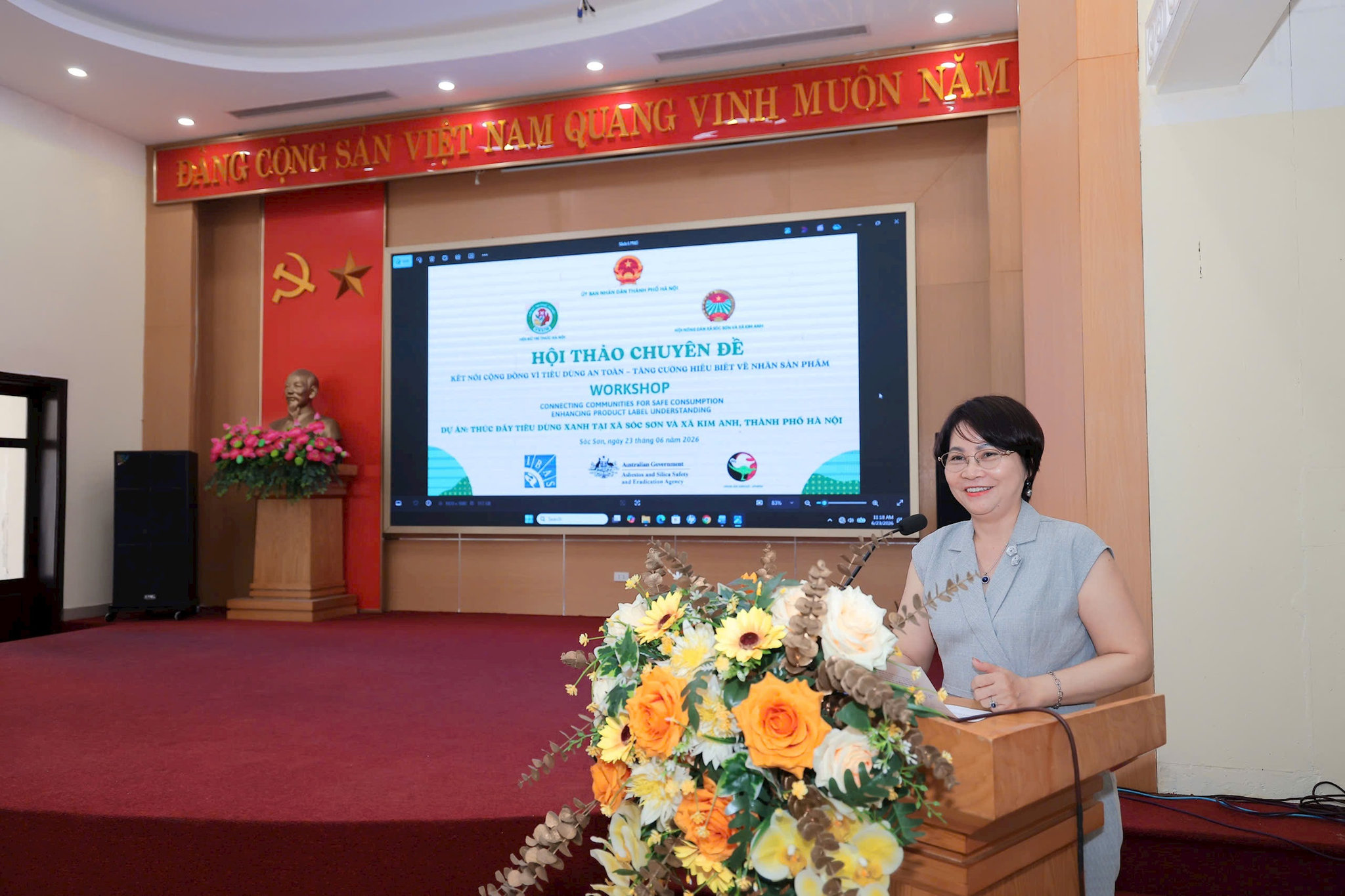
Ms. Hoang Thi Le Hang, Head Representative of APHEDA in Vietnam, said the training course provided much practical knowledge on identifying and selecting safe products. Photo: HN
You may also like


 The total budget revenue of Ung Hoa commune is estimated at 649.5 billion VND.On June 24th, the People’s Council of Ung Hoa commune, term II, 2026-2031, held its third session to evaluate the results of socio-economic development, national defense and security, and budget revenue and expenditure for the first six months of the year; and to set key tasks for the remaining months of the year and consider many issues within its authority.
From the perspective of a participant, Mr. Tran Van Tam, head of the Dien Quy village Farmers’ Association (Kim Anh commune), said the program is very practical, helping people better understand safe consumption, linked to health and agricultural production. Ms. Nguyen Thi Tin, a member of the Soc Son commune Farmers’ Association, shared that many people still don’t know how to read labels or understand safety warnings. Meanwhile, product labels are the “key” to protecting health. Improving this skill will help each person become a safe consumption advocate.
Ms. Nguyen Thi Thu Huong, Chairwoman of the Vietnam Fatherland Front Committee of Soc Son commune, affirmed that raising awareness about green consumption is not only an individual responsibility but also a shared task of the government and mass organizations.
According to Ms. Huong, the program’s key objective is to cultivate a “community core” – individuals capable of receiving and disseminating knowledge, guiding people to change their consumption habits towards safe, green, and sustainable practices. The Soc Son Commune People’s Committee will continue to cooperate with organizations, experts, and associations to promote communication, protect consumer rights, protect the environment, and build a sustainable community.
Green consumption doesn’t start with big things, but with small choices every day. When each individual changes their behavior, society will change in a more sustainable direction.
Source: https://hanoimoi.vn/gieo-thoi-quen-tieu-dung-xanh-gat-cuoc-song-an-lanh-1208961.html